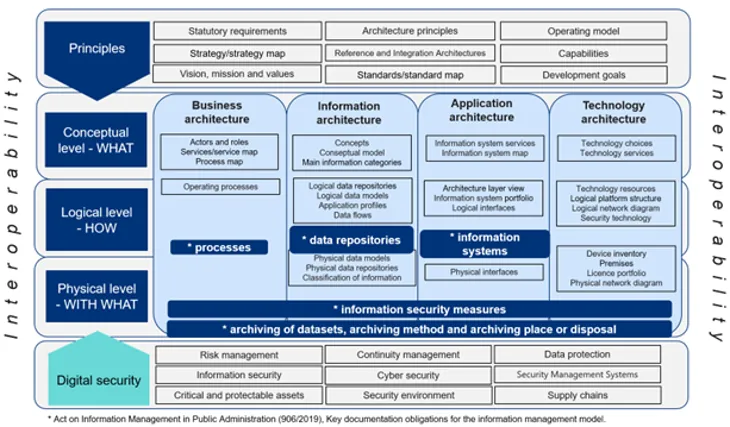
Architecture policies refer to the principles, regulations and guidelines that guide the development and maintenance of the organisation’s enterprise architecture.
They define how the organisation’s operations, data, information pools, applications, and technologies should be designed and implemented so that they support the organisation’s strategic goals and enable efficient operation.
Architecture policies help ensure that the architecture is developed in line with the organisation’s strategy. These policies also ensure that the organisation develops and uses its resources consistently and efficiently. They help to reduce risks, boost interoperability and consistency between different parts of the organisation and stakeholders, and support the organisation’s ability to adapt to changes.
Keep in mind that the creation of an extensive and complex policy collection is not something the organisation should do. It is preferable to focus on just defining the few critical policies that have the greatest impact on the implementation of the strategy and the appropriate administration of the enterprise architecture.
Critical policies may, for example, be related to
- interoperability
- principles of technological choice
- support for critical services and operations
- digital security.
They are important, and their usefulness depends on how well they are designed and implemented. By sticking to the most important policies, keeping them clear and flexible, and ensuring regular reviews and updates, the organisation’s policies remain practical and guide the organisation’s operations.